The Digital Transformation of Commercial Procurement
The transport and logistics sector in India is experiencing a historic structural transformation. For decades, expanding a commercial vehicle fleet involved navigating fragmented physical markets, visiting multiple regional dealerships, negotiating complex body building charges, and waiting through unpredictable delivery cycles. Calculating the true on road price, including national permit taxes, commercial insurance, fitness certification, and state specific registration expenses, was frequently opaque and confusing.
Today, digital platforms are changing this dynamic completely. Fleet operators, transport companies, independent truck owners, and logistics entrepreneurs across the country now have access to centralized digital ecosystems that bring complete transparency to vehicle discovery. When researching New Trucks in India, modern transport managers demand immediate access to verified technical specs, accurate price breakdowns, official manufacturer schemes, and flexible commercial financing. By digitizing commercial vehicle acquisition, businesses can expand their operational capacity faster, reduce administrative delays, and make informed financial decisions.
Overcoming Traditional Hurdles in Fleet Purchasing
In the legacy commercial procurement model, buying a new vehicle was a long and exhausting process. Transporters had to travel between disparate showrooms, attempt to compare inconsistent spec sheets, haggle over hidden dealer markups, and organize separate visits to body builders for specialized cargo boxes or tipping bodies. Furthermore, securing commercial vehicle loans required submitting physical documentation across multiple financial institutions, delaying vehicle deployment by weeks or even months.
Modern digital commercial marketplaces eliminate these operational pain points. Transport buyers can now evaluate multi brand vehicle catalogs from the comfort of their office or transport yard. Digital platforms enable instant comparison of vehicle performance metrics, including gross vehicle weight, payload tonnage, engine torque, axle configurations, and fuel efficiency across diesel, compressed natural gas, and electric models. By connecting buyers directly with certified brand dealerships, digital platforms ensure direct access to official chassis warranties, annual maintenance contracts, and priority delivery schedules.
Exploring Commercial Vehicle Segments and Configurations
To meet the demands of modern supply chains, the commercial vehicle market offers a comprehensive array of vehicle types designed for specific logistics applications. Every vehicle category plays a distinct role in keeping national supply chains running smoothly.
Last Mile and Urban Logistics Vehicles
Urban distribution requires agile, fuel efficient vehicles capable of navigating dense traffic and narrow city roads.
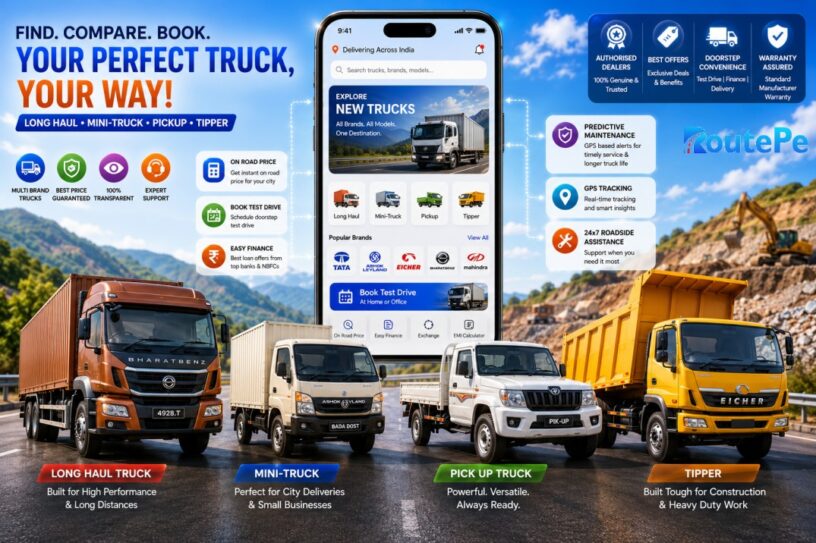
- Mini trucks: Essential for intra city freight movement, local store replenishment, and small load transportation. These compact vehicles offer low purchase costs and exceptional fuel efficiency.
- Pick up trucks: Designed for high velocity distribution, agricultural transport, and regional cargo movement. These vehicles combine car like driver comfort with strong payload capacity, allowing logistics businesses to carry heavier loads at higher speeds.
Heavy Construction and Infrastructure Vehicles
Heavy industries, mining projects, and civil construction demand specialized vehicles built to handle extreme working conditions.
- Tippers: Built with high strength tipping bodies and heavy duty hydraulic cylinders, tippers excel at transporting bulk materials such as sand, gravel, aggregate, and excavated earth across rough terrains.
- Trailers: Engineered for heavy freight, oversized industrial equipment, steel coils, and containerized cargo, articulated trailers provide the structural integrity required for high capacity transport operations.
Long Haul Freight and Highway Haulers
Interstate commerce relies heavily on robust long haul trucks capable of travelling thousands of kilometers without interruption. Transport operators select specific vehicle body lengths and axle configurations based on payload weight and volumetric cargo demands:
- 20 feet trucks: Ideal for medium payload regional routes, moving packaged consumer goods, textiles, and medium weight industrial freight.
- 32 feet single axle: A preferred choice for high volume, lighter weight cargo such as e commerce parcels, electronics, FMCG products, and auto components where deck space is prioritized.
- 32 feet multi axle: Built to carry heavier volumetric loads across interstate highway corridors, offering optimal weight distribution and superior highway stability.
- 12 wheeler: Heavy duty haulers engineered for heavy industrial goods, bulk materials, and long distance interstate transportation, delivering high tonnage capacity.
- 14 wheeler: High capacity multi axle haulers designed for maximum payload transport, offering exceptional structural endurance and lower operating cost per tonne kilometer.
Streamlining Procurement via the RoutePe Mobile App
Discovering and securing the right commercial vehicle for your business operations is effortless with the RoutePe Mobile App. Built specifically for fleet managers and commercial vehicle buyers, the application acts as a comprehensive digital showroom and procurement manager. Users can explore extensive multi brand vehicle listings, compare detailed technical parameters, and select custom body options tailored to their business needs.
The RoutePe Mobile App brings total transparency to the purchasing process. Transport operators can calculate exact state wise on road prices, review ex showroom chassis costs, and request doorstep demo drives directly to their logistics premises. This allows fleet owners and drivers to test payload performance and cabin ergonomics on their actual operational routes before making a financial commitment. Furthermore, the application connects users with pre approved commercial vehicle finance schemes, providing competitive interest rates, low down payment options, and paperless loan processing. By managing every stage of procurement digitally, transporters save time, eliminate hidden costs, and accelerate fleet growth.
Smart Component Health and Predictive Maintenance
Securing new commercial vehicles is only one part of running a profitable transport enterprise; maintaining vehicle health and avoiding unexpected breakdowns is equally essential. Traditional predictive maintenance frameworks rely on expensive telematics hardware, extra sensors, or vehicle specific hardware installations that increase operational costs. RoutePe solves this challenge by delivering intelligent component health monitoring directly through smartphone GPS technology.
As a commercial vehicle moves along its route, the intelligent GPS engine inside the mobile app tracks actual distance covered and continuously evaluates component wear based on real usage. Rather than relying solely on fixed, calendar based service schedules that ignore actual operating conditions, component health is calculated dynamically according to cumulative mileage. The predictive platform monitors crucial serviceable components, including engine oil, oil filters, air filters, brake pads, clutch assemblies, tyres, belts, and batteries. For each part, the system estimates remaining service life, remaining mileage before replacement, component health scores, and service priority rankings. Whenever a workshop performs a service or replaces a component, updating the maintenance record automatically resets the part lifecycle and recalculates expected wear from that point forward. This provides fleet owners with an evolving, customized maintenance profile without requiring hardware installations.
Unifying Vehicle Procurement and Maintenance Ecosystems
Building a successful transport business requires integrating vehicle discovery with efficient ongoing maintenance workflows. When fleet sizes grow, managing service schedules, spare parts procurement, and repair center interactions becomes a critical driver of profitability. Streamlining workshop operations ensures that commercial vehicles spend less time in garages and more time earning on the highway.
To support this seamless operational workflow, modern service facilities rely on specialized software tools. Implementing dedicated Truck Workshop Software helps service centers digitize job card creation, monitor spare parts inventory, and optimize repair turnaround times. Independent garages and fleet repair hubs utilize comprehensive Garage Management Software to automate customer billing, schedule technician workflows, and manage service histories. By combining smart mobile fleet tracking with robust Workshop Management Software, fleet owners and repair facilities work together to maintain vehicle uptime, lower operating expenses, and extend the lifespan of commercial fleets across India.
Conclusion
The evolution of commercial transportation in India is driven by digital innovation, fleet visibility, and smart asset management. From nimble pick up trucks to heavy multi axle long haul haulers, digital platforms empower transport businesses to buy and maintain vehicles with total confidence. By leveraging modern mobile tools, calculating true operating costs, and adopting intelligent usage based maintenance strategies, fleet operators can reduce downtime, maximize revenue, and build a profitable, future ready business.
