An editorial by RoutePe Horizon
A New Growth Phase for India’s Roads
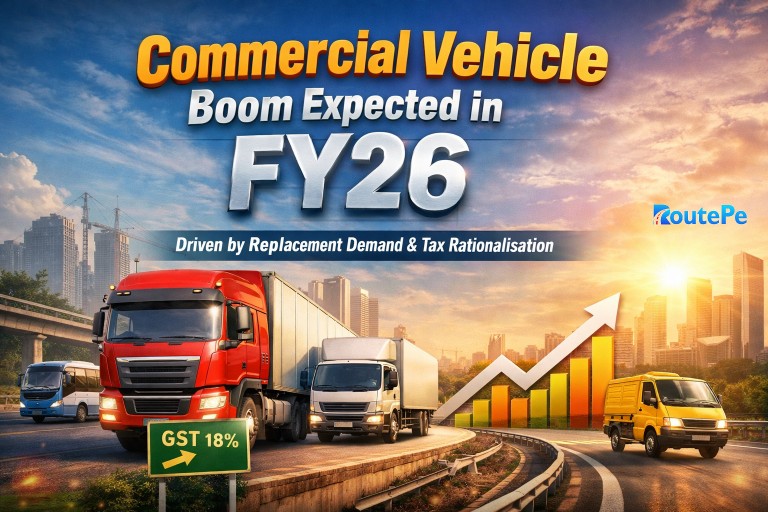
India’s commercial vehicle industry is entering a decisive new growth cycle. After a period of cautious spending and delayed fleet expansion, the market is showing strong signs of revival. Replacement demand, improved freight movement, and recent tax rationalisation are collectively setting the stage for commercial vehicle sales to reach fresh highs in FY26
For the logistics ecosystem, this is more than a routine recovery. It signals renewed confidence across transporters, shippers, and financiers.
Replacement Demand Is Driving Momentum
Fleet owners typically hold back on purchases when demand visibility is weak. When they begin upgrading vehicles at scale, it reflects stronger utilisation and healthier business outlooks.
Today, a significant portion of India’s truck and bus fleet is ageing. Higher maintenance costs, frequent breakdowns, and lower fuel efficiency are making older vehicles expensive to operate. Replacing them with modern, fuel-efficient models improves uptime and profitability, making renewal an economic necessity rather than a discretionary choice.
This large replacement cycle is now becoming the primary engine behind the surge in orders.
Tax Rationalisation Improves Affordability
Affordability is another key catalyst. Tax rationalisation has reduced the effective acquisition cost of commercial vehicles, easing the burden on small and mid-sized fleet operators.
For many transporters, even small price reductions make a big difference in financing decisions. Combined with easier access to credit and steady infrastructure spending, this has created favourable conditions for fresh purchases
The result: faster buying decisions and stronger market momentum.
What Counts as “Commercial Vehicles”?
It’s important to clarify the scope of these projections.
The reported growth primarily includes road-going vehicles such as heavy, medium, and light trucks, along with buses and pick-up vehicles. Specialised off-highway equipment like cranes and earthmovers typically follow separate construction-equipment cycles and are not the core contributors to these sales milestones
In short, this is largely a trucks-and-buses story.
What This Means for the Logistics Ecosystem
An expanding fleet directly impacts the entire supply chain.
More vehicles on the road can lead to:
- Faster load availability
- Reduced turnaround times
- Better regional reach
- Increased competition
- Greater price efficiency for shippers
For enterprises, this means improved reliability and capacity. For transporters, it creates opportunities to scale, modernise, and secure larger contracts.
Yet, more vehicles alone do not guarantee better outcomes.
The Shift from Capacity to Efficiency
As fleet sizes grow, coordination becomes the real differentiator. Manual paperwork, fragmented communication, delayed payments, and limited visibility can quickly erase the benefits of added capacity.
This is where digital systems matter.
The next phase of India’s logistics evolution will depend not just on how many trucks are sold, but on how intelligently those trucks are managed.
RoutePe’s Perspective
At RoutePe, we see this transition as a turning point.
A larger fleet base increases the need for:
- Real-time tracking
- Smart load discovery
- Digital documentation
- Performance analytics
- Faster onboarding of partners
More vehicles require smarter infrastructure.
FY26 may therefore mark more than a sales milestone. It could represent the shift from a capacity-constrained market to a technology-driven, efficiency-first ecosystem.
India’s roads may soon carry more trucks and buses than ever before. The real opportunity lies in ensuring every kilometre is optimised, every shipment is visible, and every transaction is seamless.
That’s the future RoutePe is building toward.
