This is RoutePe Horizon editorial.
India’s Union Budget 2026 has delivered a clear message for the transport and logistics industry. Modernization, electrification, and efficiency are now national priorities. While the announcements span multiple sectors, commercial vehicles (CVs) stand to benefit significantly through policy stability, electric mobility incentives, and infrastructure expansion. For fleet operators, shippers, and logistics platforms, this budget signals lower costs, faster adoption of technology, and stronger long-term growth potential.
The direction is simple: cleaner fleets, smarter operations, and a more reliable supply chain.
Push Towards Electric Commercial Vehicles
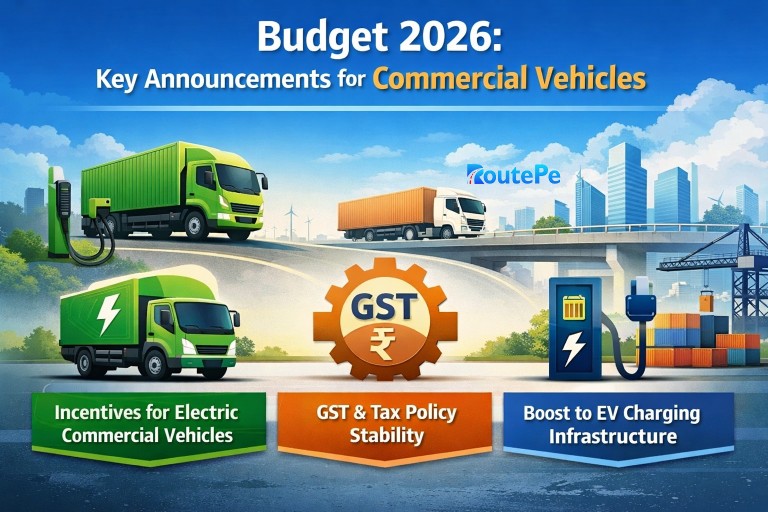
One of the most impactful developments is the government’s continued focus on electric mobility, with incentives increasingly extending beyond passenger vehicles to commercial fleets. Light electric trucks, last-mile delivery vehicles, and small cargo carriers are expected to gain the most from expanded subsidy support.
For logistics businesses, this reduces upfront vehicle costs and makes EV adoption financially viable. Electric commercial vehicles also bring lower fuel expenses, reduced maintenance, and better uptime considered critical advantages in high-utilization fleet operations. Over time, this shift can significantly improve profit margins while helping companies meet sustainability targets.
Electrification is no longer experimental; it’s becoming operational reality.
Tax Stability and Cost Predictability
Predictable taxation is crucial for commercial vehicle operators, fleet owners, and logistics businesses. With Budget 2026, the government has emphasized clarity in GST and other duties, helping businesses plan vehicle purchases, operating expenses, and long-term investments with confidence. This stability reduces surprises, lowers compliance headaches, and improves cash flow for operators.
Key Highlights:
- Standard Commercial Vehicles: Most diesel and petrol trucks continue to attract a uniform GST rate of 18%, ensuring consistent pricing across vehicle segments.
- Electric Commercial Vehicles: To accelerate the shift to green transport, EV trucks and vans retain a concessional 5% GST, lowering the upfront cost for fleet electrification.
- Special-Purpose Vehicles: Vehicles like ambulances, fire trucks, and refrigerated vans are taxed at preferential rates, making critical service fleets more affordable.
- Removal of Additional Cess: Several previous levies and surcharges on CVs have been streamlined or removed, reducing hidden costs and simplifying the total price calculation for buyers.
- Customs & Import Duties: Budget provisions aim to rationalize import duties on essential commercial vehicle parts and EV components, supporting domestic assembly while maintaining price competitiveness.
- Operational Efficiency Incentives: Some allowances for fleet operators, like depreciation benefits on EVs and commercial trucks, remain intact, helping companies plan capital expenditure and replacement cycles efficiently.
These measures collectively improve cost predictability, cash flow planning, and investment confidence for the commercial vehicle sector, especially for fleets looking to modernize or transition to electric mobility.
Stronger Infrastructure for Freight Movement
Beyond vehicles themselves, the budget reinforces the backbone of logistics, the infrastructure. Investments in highways, logistics parks, container manufacturing, and EV charging networks are set to improve freight efficiency across the country.
Better roads reduce transit times and fuel consumption. Expanded charging infrastructure makes electric fleets practical for intercity routes. Increased domestic container production strengthens supply chain resilience and reduces dependency on imports.
Together, these improvements translate into faster deliveries, fewer delays, and lower operational costs for transporters and shippers alike.
Digital Transformation Gains Momentum
The broader policy environment also supports digitalization in logistics. As operations scale, technology becomes essential for managing tenders, tracking shipments, verifying documents, and securing payments.
Platforms that combine fleet procurement, payments, insurance, tracking, and automation are well positioned to benefit. Businesses are increasingly seeking integrated solutions that simplify operations rather than juggling multiple vendors.
The future of logistics is not just electric, it is digital.
What This Means for the Industry
Budget 2026 creates a favorable environment for commercial vehicles by aligning incentives, infrastructure, and policy stability. For operators, this means lower costs and higher efficiency. For technology platforms, it opens new opportunities to innovate. For the industry as a whole, it marks a step toward a cleaner, faster, and more transparent freight ecosystem.
