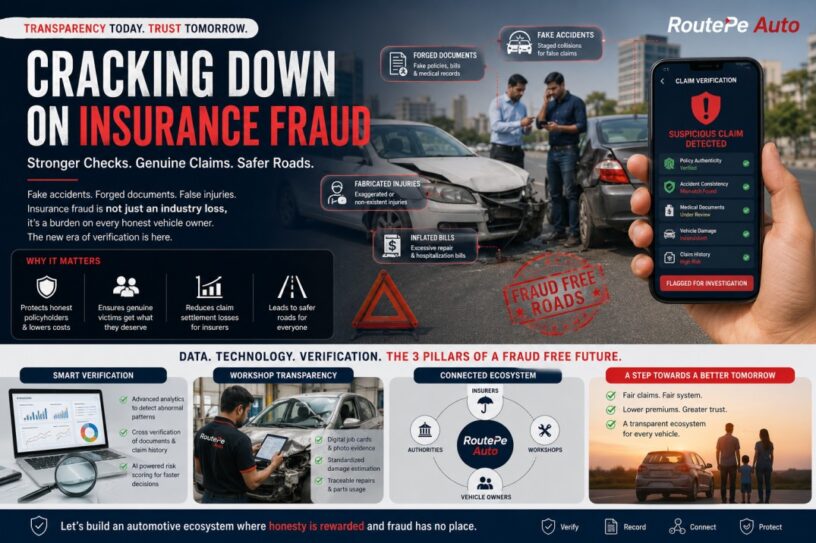


India’s motor insurance industry is entering a more closely monitored phase. Insurers are increasing scrutiny of suspicious third party claims amid concerns around fraudulent accidents, forged documents, fabricated injuries and rising compensation costs. A recent Madras High Court intervention has further strengthened the focus on investigating suspected motor insurance fraud.
But the bigger story for India’s automotive ecosystem may not be about insurance premiums alone.
It is about trust.
As insurers become more careful about the evidence behind a claim, vehicle owners, dealers, workshops and buyers may increasingly need reliable records showing what actually happened to a vehicle throughout its life.
That could have a significant impact on everything from buying a used vehicle to managing a workshop.
The Hidden Problem With a Vehicle’s History
When someone buys a vehicle, they usually receive a collection of documents.
Registration details. Insurance papers. Service invoices. Pollution certificates. Loan documents, where applicable.
But these documents rarely provide a complete picture.
Consider a five year old car that has been repaired after an accident. A buyer may know that the car has been serviced regularly, but may not know whether the vehicle previously suffered major structural damage.
The same issue exists with commercial vehicles.
Someone searching for Used Trucks for Sale may want to know whether a truck has been involved in a major accident, whether its suspension components have been replaced, how frequently it was serviced and whether its mechanical condition matches the seller’s description.
Someone searching for Used Cars for Sale may want to know whether the car has been involved in a major accident, undergone structural repairs, had critical components replaced or received regular servicing before making a purchase.
For someone looking at Used Bikes for Sale, accident and repair history can be equally important.
And for buyers considering Used Tractors for Sale, maintenance history can tell a very different story from what a visual inspection reveals.
The problem is not necessarily a lack of information.
It is that the information is fragmented.
Why Insurance Investigations Could Accelerate Digital Records
The current insurance fraud crackdown highlights the importance of evidence.
According to recent reporting, insurers are dealing with suspected fake accidents, forged policies, fabricated injuries and false medical documentation. The Madras High Court has directed district level investigation teams in Tamil Nadu to examine suspected fraudulent claims and take appropriate action where wrongdoing is established.
This creates a natural need for stronger documentation.
If a vehicle is genuinely involved in an accident, there should ideally be a trail.
When did the accident occur?
What was the condition of the vehicle?
Which components were damaged?
Where was the vehicle repaired?
Which parts were replaced?
What work was performed?
What did the vehicle look like before and after the repair?
The more of this information that can be recorded digitally, the easier it becomes to establish a credible history.
That does not mean every workshop record will automatically become insurance evidence. But a structured digital record can make verification significantly easier.
Workshops Could Become the New Source of Vehicle Intelligence
This is where India’s workshops have an opportunity to become much more important.
A Bike Workshop, Car Workshop or Truck Workshop already sees vehicles at important moments in their lifecycle.
A vehicle enters the workshop.
A technician examines it.
Parts are identified.
Repairs are performed.
Components are replaced.
The vehicle is tested.
The customer receives the vehicle back.
Today, much of that information may remain inside paper job cards, invoices, spreadsheets or disconnected software systems.
Imagine instead that every significant repair creates a structured digital vehicle event.
A damaged bumper is replaced.
A brake assembly is changed.
A suspension component is replaced after an accident.
A tyre set is changed.
A major engine repair is completed.
The vehicle receives a complete inspection.
Each event can become part of the vehicle’s digital history.
Over time, that history can become more valuable than a simple service invoice.
From Garage Management to Vehicle History
This also changes what Garage Management software can mean.
Traditionally, garage software focuses on running the business.
Customer management.
Job cards.
Billing.
Inventory.
Payments.
Technician allocation.
These functions remain essential.
But modern Workshop Management can go further by making the vehicle itself a central record.
Instead of asking only, “What work did this customer order?”, the system can also answer, “What happened to this vehicle during its visit?”
That distinction matters.
A workshop that digitally records inspections, photographs, replaced components, repair details and service history can potentially create a much stronger information trail.
For the workshop, it improves operational visibility.
For the vehicle owner, it creates a maintenance record.
For a future buyer, it can provide greater transparency.
And for insurers, appropriately shared information could potentially support claim verification.
This Could Transform the Used Vehicle Market
The implications extend well beyond insurance.
India’s pre owned automotive market depends heavily on trust.
When someone searches for Used Cars for Sale, they are not simply comparing prices. They are trying to estimate future risk.
A cheaper vehicle with an unclear history may ultimately cost more through unexpected repairs.
A slightly more expensive vehicle with a documented maintenance history may be a safer purchase.
The same principle applies to trucks, motorcycles and tractors.
Imagine two otherwise similar vehicles being offered for sale.
Vehicle A has limited documentation.
Vehicle B has a digital history showing regular servicing, workshop inspections, accident repairs, replaced components and maintenance events.
The second vehicle can potentially give the buyer much greater confidence.
This could gradually create a new category within India’s pre owned market:
vehicles with verifiable history.
The Opportunity Is Not to Collect More Data
However, simply collecting huge amounts of information is not the answer.
The objective should be to collect useful and trustworthy information.
A workshop does not need to record every insignificant event.
Instead, important vehicle events can be structured around the lifecycle of the vehicle.
Service.
Inspection.
Repair.
Accident damage.
Parts replacement.
Major maintenance.
Roadworthiness checks.
Ownership related events where appropriate.
This creates a practical vehicle history rather than a meaningless database.
Technology can then make that information searchable and understandable.
What Vehicle Owners Can Do Today
Vehicle owners do not need to wait for a completely connected automotive ecosystem.
They can already start building better records.
Keep service invoices.
Maintain insurance documents.
Record significant repairs.
Take photographs after major accident damage.
Keep documentation for replaced components.
Use established workshops whenever possible.
Most importantly, retain records even after the immediate repair has been completed.
These records can become valuable when making an insurance claim or selling the vehicle years later.
A well maintained vehicle history can become part of the vehicle’s resale proposition.
What This Means for Workshops
For workshops, the opportunity is even larger.
Digital records can improve much more than compliance or insurance documentation.
A workshop can use structured data to understand repeat repairs, parts consumption, technician productivity, customer behaviour and vehicle service patterns.
A Car Workshop can identify vehicles approaching scheduled maintenance.
A Truck Workshop can track high mileage commercial vehicles and recurring component issues.
A Bike Workshop can maintain detailed service histories for customers who return regularly.
With better Workshop Management, the workshop moves from being simply a place where vehicles are repaired to becoming a long term service partner for the vehicle owner.
That relationship can create recurring business while simultaneously generating better vehicle records.
A More Connected Automotive Ecosystem
The insurance industry’s fight against fraud exposes a broader weakness in India’s automotive ecosystem.
Vehicle information is distributed across multiple participants.
The owner has some information.
The insurer has some.
The workshop has some.
The dealer has some.
The parts supplier has some.
The problem is that these records generally do not form one coherent vehicle history.
A connected automotive platform can help bridge these disconnected points.
The objective should not be to give every participant access to everything.
Privacy, consent and data ownership remain important.
Instead, the goal is to create controlled information flows where the right information can be verified by the right participant when necessary.
That could eventually make insurance claims easier to validate, vehicle repairs easier to document and used vehicles easier to evaluate.
From Fraud Prevention to Trust Infrastructure
The current motor insurance crackdown is fundamentally about protecting the insurance system from fraudulent claims and controlling rising losses. Industry reports indicate that insurers are facing pressure from both suspected fraud and higher compensation liabilities.
But the long term opportunity goes beyond insurance.
India needs better vehicle histories.
It needs better workshop records.
It needs better transparency in the used vehicle market.
And it needs stronger digital connections between the businesses and people involved in a vehicle’s lifecycle.
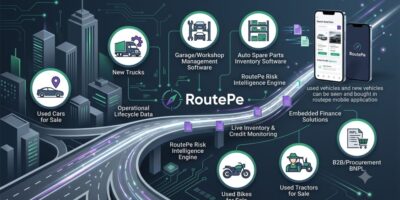
This is where automotive technology platforms such as RoutePe can play an important role.
The future of Garage Management and Workshop Management should not stop at invoices and job cards. It can evolve towards creating a trusted digital service history around every vehicle.
That history could eventually follow a vehicle from its first service to its eventual resale.
Whether someone is looking for Used Cars for Sale, Used Trucks for Sale, Used Bikes for Sale or Used Tractors for Sale, the most valuable question may increasingly become:
Can I verify this vehicle’s history?
As India’s insurance and automotive industries become more data driven, that question could become just as important as price, mileage and model year.
And that could make vehicle history one of the most valuable assets in India’s next generation automotive ecosystem.