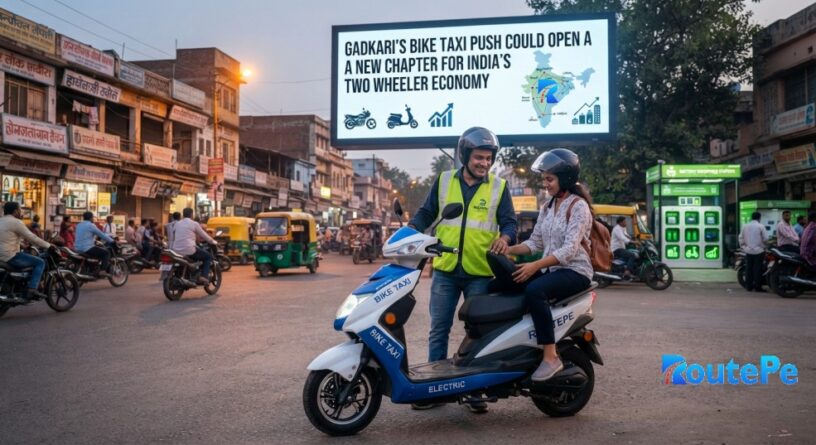

India’s bike taxi industry could be heading towards a major expansion after Union Road Transport and Highways Minister Nitin Gadkari urged state governments to allow private two wheeler owners to operate bike taxis. The minister said the move could create livelihood opportunities for around eight crore people, particularly in rural areas, where access to employment and affordable transport remains a challenge.
Gadkari’s remarks have brought renewed attention to the future of motorcycle based passenger transport in India. While bike taxi services have already gained popularity in several cities, their growth has been restricted by differences in state regulations. The latest appeal from the Centre could encourage more states to examine the economic and mobility benefits of allowing private motorcycles and scooters to carry passengers.
However, the announcement should not be interpreted as an automatic nationwide permission. Transport is a state subject, and individual state governments continue to decide whether bike taxis can operate within their jurisdictions and what conditions they must follow.
A New Opportunity for Private Two Wheeler Owners
For millions of people who already own a motorcycle or scooter, the proposal could create an additional source of income. Instead of depending entirely on a traditional job or purchasing a separate commercial vehicle, eligible owners could potentially use their existing two wheeler for passenger services.
This could be particularly relevant in smaller towns and rural areas, where public transport options are often limited. A private bike taxi could provide a practical connection between villages, markets, railway stations, bus terminals and nearby employment centres.
The opportunity is not limited to full time drivers. Students, part time workers and individuals seeking flexible income could also benefit if suitable regulations and operating models are introduced. At the same time, the success of such a system will depend on whether states establish clear rules for registration, permits, insurance, passenger safety and driver responsibilities.
States Will Decide How Fast the Industry Grows
The Centre’s position may provide policy encouragement, but implementation will remain a state level responsibility. Some states have already developed frameworks for bike taxi operations, while others continue to debate the safety, insurance and regulatory implications.
The Motor Vehicle Aggregator Guidelines, 2025 provide a framework under which states can allow aggregators to use non transport motorcycles for passenger journeys. The guidelines also allow states to prescribe their own conditions and fees.
This means the next stage of growth will depend on how individual states respond. A clear and consistent regulatory environment could help operators invest with greater confidence. It could also encourage manufacturers, technology companies and service providers to develop products specifically for the growing bike taxi market.
Why This Could Further Boost eBike Sales
One of the most important effects of wider bike taxi adoption could be a significant increase in demand for electric two wheelers.
As more people consider using their vehicles for passenger transport, running costs will become a major factor in their purchasing decisions. Electric scooters and motorcycles can offer lower energy and maintenance costs compared with conventional petrol vehicles, making them attractive for riders who spend several hours on the road each day.
For a private owner considering a bike taxi as an additional source of income, the choice of vehicle will increasingly depend on operating economics. A vehicle that costs less to run can help improve the financial viability of passenger services, particularly where daily travel distances are high.
Another development making electric two wheeler ownership more practical is the growing availability of swappable battery charging stations. Instead of waiting for a battery to recharge, compatible eBike owners can exchange a depleted battery for a charged one at a designated station. This can reduce charging downtime and make electric vehicles more convenient for riders who depend on their two wheelers for daily travel or income generation. As battery swapping networks expand, the convenience of owning an eBike could become an even stronger reason for private owners to consider electric mobility.
This could create a new demand segment for eBike manufacturers. Instead of selling only to individual commuters, manufacturers could increasingly target private owners, independent riders and small mobility operators who want vehicles designed for commercial usage.
The opportunity could extend beyond vehicle sales. Demand may also rise for battery replacement, charging solutions, service packages, spare parts and financing options tailored to high usage two wheelers. If state governments introduce supportive policies, the bike taxi sector could become an important new customer base for India’s growing electric mobility ecosystem.
Safety and Accountability Will Be Essential
The expansion of bike taxis must also be accompanied by stronger attention to road safety. Carrying passengers introduces responsibilities that go beyond ordinary personal vehicle usage.
Gadkari also spoke about a proposed negative point system for traffic violations. Under the proposed system, repeated violations could lead to the suspension or cancellation of driving licences. The objective is to encourage responsible driving and make habitual offenders more accountable.
For bike taxi operators, this could mean greater emphasis on driver training, vehicle fitness, insurance coverage and compliance with local transport rules. Passenger confidence will be essential for the industry to grow sustainably.
Technology could play an important role in supporting these requirements. Digital onboarding, vehicle documentation, maintenance records, trip monitoring and service reminders could help operators manage their responsibilities more effectively.
The Need for Better Vehicle Management
As private two wheelers become part of a larger passenger transport network, vehicle owners will need more than an app that connects them with passengers. They will also need reliable tools to manage the condition and operating costs of their vehicles.
High daily usage can increase wear on tyres, brakes, suspension components and other serviceable parts. For electric two wheelers, battery usage, charging patterns and range performance may also become important considerations.
This creates an opportunity for connected automotive platforms to support the wider bike taxi ecosystem. Vehicle owners could benefit from mileage tracking, maintenance reminders, service history, workshop access and spare parts availability through a single digital platform.
For manufacturers and workshops, such systems could provide better visibility into vehicle usage and maintenance demand. For riders, they could help reduce unexpected breakdowns and improve the reliability of their income generating vehicles.
A Wider Mobility Opportunity for India
The bike taxi debate is ultimately about more than passenger transport. It is also about how India can make better use of its existing two wheeler base while creating new economic opportunities.
Private motorcycles and scooters are already among the most widely used vehicles in the country. If suitable regulations allow more of them to participate in passenger services, the result could be a more flexible and accessible mobility network.
The proposal could also encourage innovation in electric mobility, vehicle financing, insurance, maintenance and digital transport services. As more people consider two wheelers as income generating assets, the demand for reliable ownership support is likely to increase.
RoutePe Brings New Two Wheelers Closer to Buyers
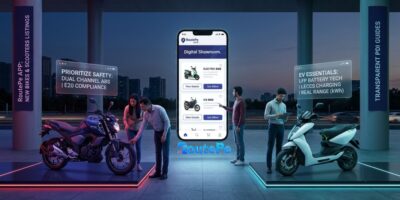
As demand for personal and commercial two wheelers grows, digital platforms can make the vehicle buying journey more convenient. Through the RoutePe Mobile Application, users can explore a digital showroom of new bikes, browse electric and conventional models, compare vehicle details and specifications, and view pricing before making a purchase decision. The application also allows interested buyers to request offers by submitting their vehicle preferences and purchase requirements. For individuals considering a bike taxi as an additional source of income, this creates a convenient way to discover new two wheelers that could support their mobility and earning needs. As India’s bike taxi ecosystem develops, platforms such as RoutePe could help connect growing vehicle demand with a more accessible and organised new vehicle sales experience.
For RoutePe, the expansion of India’s bike taxi ecosystem could create a significant new opportunity in new vehicle sales. As private two wheeler owners increasingly consider using their vehicles to generate additional income, demand could shift towards reliable, fuel efficient and commercially suitable motorcycles and eBikes. RoutePe can play a role in this emerging market by connecting prospective riders with new vehicle options while also supporting their ownership, maintenance and mobility needs. If more states open their markets to private bike taxis, the resulting increase in two wheeler demand could create a new growth channel for vehicle manufacturers, dealers and platforms like RoutePe.
Gadkari’s appeal may therefore become an important milestone in India’s bike taxi journey. The next step will be for states to establish clear rules that balance livelihood opportunities with passenger safety. If that balance is achieved, private two wheelers could play a much larger role in India’s urban and rural mobility future, while giving the electric two wheeler industry another powerful reason to accelerate its growth.
