

Purchasing a pre owned personal car requires a realistic understanding of real world driving stresses, highway commutes, and maintenance habits across Indian metro cities and tier two markets. Surface shine, freshly detailed cabin seats, and deep tire treads often cover hidden mechanical defects, making detailed ownership evaluation essential for smart buyers. The RoutePe mobile application provides a direct digital marketplace where vehicle owners, individual buyers, and auto enthusiasts connect to execute transparent private deals. Cutting out third party dealer commissions allows prospective owners to review maintenance histories, verify operational usage, and finalize safe purchases with complete clarity.
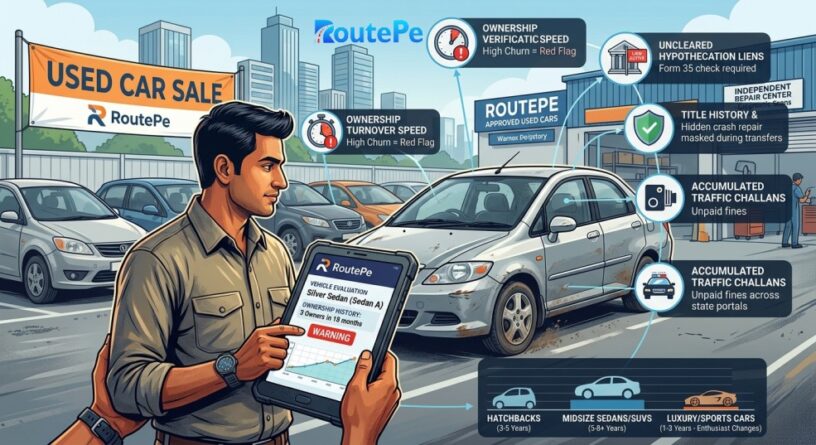
Ownership Turnover Speed vs Raw Registration Totals
Relying strictly on the total number of past owners recorded on a vehicle registration certificate rarely provides a complete picture of mechanical condition. A ten year old sedan showing four long term owners usually indicates normal life progression such as career advancements, growing family space requirements, or routine vehicle upgrades over time. That steady ownership pattern reflects predictable daily commutes, scheduled oil changes, and disciplined preventative maintenance.
A distinct warning sign emerges when a personal used car changes hands three times within a single twelve month span. Rapid ownership cycling signals a recurring, expensive flaw like hidden transmission slip, severe engine oil burning, electrical short circuits, or structural frame damage that successive buyers chose to unload rather than expensive repair. For users evaluating cars listed on RoutePe, calculating how fast a car moves between owners offers far superior clarity than simply counting total names listed on official documents.
Spotting Mechanical Misrepresentation and Red Flags
When a used car passes through multiple sellers in rapid succession, physical discrepancies often point to underlying mechanical stress or hidden accidents. A primary red flag occurs when a car features a suspiciously low odometer reading paired with severe component wear across internal controls.
Consider an executive sedan advertised with minimal kilometers that displays worn pedal rubber, polished steering wheel leather, scraped gear knobs, or mismatched paint shading across body panels. That combination suggests heavy commercial cab usage, aggressive driving abuse, or deliberate odometer rollback manipulation. Heavy usage puts major strain on dual mass flywheels, suspension bushings, air conditioning compressors, and automatic gearboxes. Successive buyers frequently discover severe mechanical problems or electrical failures after taking delivery, opting for quick resale to cut losses. Inspecting pedal wear, panel alignment gaps, door rubber seals, and engine bay bolts protects buyers from taking on someone else’s expensive repair project.
Understanding Harmless High Owner Counts in Personal Vehicles
A high owner total on paper does not automatically mean a vehicle suffers from poor reliability. In specific car segments, high transfer rates occur naturally due to changing lifestyle preferences rather than mechanical failures.
- SUV and Convertible Models: Sports cars, two door coupes, and off road four wheel drive vehicles often experience rapid owner churn because buyers purchase them for weekend fun, enjoy them for a single season, and sell them once novelty fades.
- Corporate and Family Title Adjustments: Cars frequently transfer ownership on paper between family members, parent companies, or business subsidiaries for tax structuring without ever changing primary drivers or skipping factory service intervals.
- Relocation and Temporary Transfers: Working professionals moving across states often transfer vehicle titles to friends or colleagues, creating extra paper entries for well maintained vehicles.
Recognizing these market dynamics helps buyers on RoutePe discover exceptional deals on well maintained passenger cars that only look heavily owned due to paperwork updates.
Detailed Checklist for Evaluating Multi Owner Passenger Cars
Assessing a passenger vehicle with multiple past owners requires investigating key operational systems that single owner vehicles rarely bring into question. Buyers should systematically review six core areas prior to purchase:
- Maintenance Log Continuity: Cross check electronic service records, dealership job cards, and independent invoice dates across all past owners to confirm unbroken maintenance care.
- Title History and Accident Claims: Audit insurance claim histories, structural chassis beams, and crumple zone welds to reveal hidden crash repairs masked during transfers.
- Odometer Consistency: Verify odometer figures against official workshop logs, digital scanner readings, and state inspection records to rule out mileage tampering.
- Repair Quality and Body Panels: Inspect for uneven panel gaps, oversprayed rubber trim, aftermarket headlamps, or cheap body filler work following body repairs.
- Vehicle Usage History: Determine whether the vehicle served as a private commuter, an aggregator rental car, a commercial taxi, or an off road trial rig.
- Ownership Timeline Gaps: Identify brief holding periods between resales, as brief gaps frequently indicate unresolved mechanical faults or persistent electrical gremlins.
Strategic Inquiries for Sellers on RoutePe
Asking generic questions about why previous owners decided to sell a vehicle rarely yields actionable facts, especially if the current seller is the third or fourth owner. Buyers obtain far better results by requesting complete paper trails and maintenance records.
Requesting full service histories, workshop receipts, and insurance claim documentation allows buyers to analyze past usage objectively. Learning whether frequent ownership transfers aligned with routine career moves or recurring mechanical issues enables prospective owners to evaluate remaining clutch life, engine compression, and transmission health accurately.
Paperwork Realities, Title Limbo, and Unrecorded Transfers
Official paper owner counts on registration databases do not always reflect actual daily driving histories across Indian cities. Unrecorded private sales, open transfer forms, and delayed registration updates frequently occur without updating the smart card at regional transport offices. A white plate passenger car listed under one owner on official registry databases may have actually been operated as an unrecorded commercial taxi or shared corporate runner across several drivers.
On the other hand, auto dealership trade ins, consignment holdings, and auction transfers generate extra owner entries on paper without altering actual road usage. Buyers must treat registration cards as a starting point while focusing primary effort on physical inspections, electronic diagnostic scans, and live database verifications.
Validation via Independent Auto Workshops and Repair Centers
For prospective car buyers, service records maintained by authorized service centers and independent auto workshops provide ultimate clarity on true vehicle condition. Scheduled servicing at professional repair garages leaves an undeniable digital footprint of clutch overhauls, timing belt replacements, suspension shock renewals, and brake disc work. Sellers on RoutePe who transparently share complete workshop job cards or independent garage receipts eliminate uncertainty for prospective buyers. Verifying recent repair invoices confirms whether preventative care was prioritized or if cheap quick fixes were applied to conceal major engine faults, giving buyers complete security before finalizing financial terms.
Why Ownership Patterns Vary Across Vehicle Categories
Resale momentum varies significantly across different car classes, shaped by daily utility demands, fuel economy, and initial purchase pricing.
| Vehicle Category | Typical Ownership Duration | Primary Drivers of Ownership Changes |
| Hatchbacks and Compact Cars | Moderate (3 to 5 Years) | Popular for first time drivers, city commutes, and family entry points upgraded as needs grow. |
| Midsize Sedans and Family SUVs | Long (5 to 8+ Years) | Practical primary household vehicles kept long term for highway travel, comfort, and reliability. |
| Luxury Sedans and Sports Cars | Short (1 to 3 Years) | Driven by lifestyle churn, high out of warranty maintenance costs, and frequent enthusiast upgrades. |
Valuation Impact and Vehicle Financing Realities
A high total owner count plays a secondary role when determining car market value or securing pre owned auto loans. Overall market valuation depends far more on engine compression, transmission smoothness, body shell condition, tire tread depth, and clear documentation.
Auto loan lenders and vehicle insurance providers evaluate machine age, structural safety, and active registration validity over raw owner totals. A mechanically sound multi owner passenger car with complete service records retains strong market value and secures competitive loan approval without difficulty.
Resolving Legal, Lien, and Tax Traps
Paperwork oversights accumulate rapidly when passenger cars pass through sequential private sales without thorough verification.
- Uncleared Hypothecation Liens: Loan liens from private banks or financial institutions often stay active on official registration portals if the original buyer paid off the loan but failed to submit Form 35 and bank clearance letters to the registration authority.
- Interstate No Objection Certificate Expiry: If a clearance certificate was issued to transfer a car to another state but the buyer never completed re registration at the destination office, the car enters legal limbo where neither jurisdiction claims active authority.
- Accumulated Traffic Challans: Unpaid electronic traffic fines from speed cameras or parking violations linger on vehicle registration records across multiple state transport portals.
- Commercial Cab Conversion Gaps: Cars previously registered as commercial yellow plate taxis and converted to private white plates often carry hidden commercial tax liabilities or missing structural clearance documents.
By using the RoutePe platform to browse verified car listings, review uploaded documentation, and message sellers directly, buyers can navigate used car transactions safely. Combining thorough physical inspections with official portal checks ensures drivers select dependable, high quality used cars ready for the open road.