


Navigating the pre owned agricultural machinery market in India demands a grounded understanding of how tractors are utilized across diverse farming cycles. While physical paint, tire tread depth, and engine sounds provide initial hints, evaluating true ownership history unveils critical context regarding workload severity, maintenance habits, and underlying mechanical reliability. On the RoutePe mobile application, farmers, custom hiring operators, and rural machinery buyers manage their agricultural fleets while engaging directly in peer to peer used tractors for sale across farming communities. Direct peer to peer transactions eliminate broker markups, allowing buyers to verify operational backgrounds, inspect equipment thoroughly, and secure dependable machinery for seasonal field work.
Transfer Frequency versus Raw Ownership Numbers
Official registration entries on a tractor paper smart card rarely present the full operational picture. A seven year old 45 horsepower tractor that has stayed with two long term agricultural owners typically reflects standard farm expansion, routine land upgrades, or normal machinery modernization. Such steady tenure points to predictable seasonal duties, structured routine maintenance, and balanced engine loading during plowing or harvesting operations.
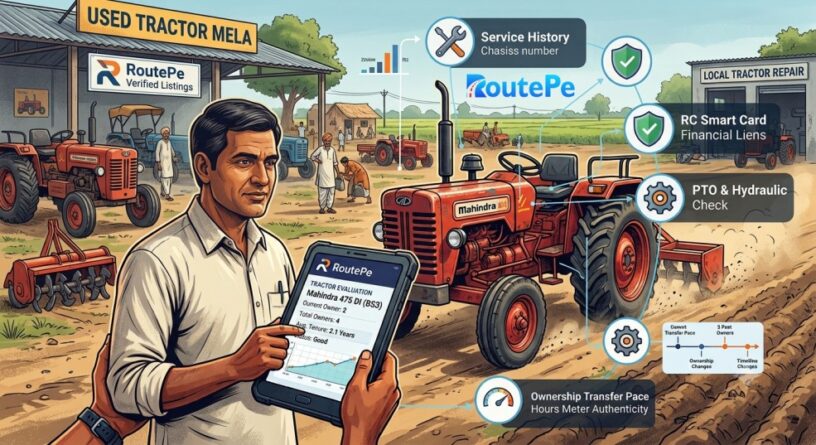
In contrast, a tractor cycling through three distinct owners within two harvest seasons signals an immediate operational red flag. Rapid ownership turnover indicates persistent mechanical defects such as severe engine overheating under heavy field load, hydraulic lift failures, or troublesome power take off gear engagement that prior buyers quickly offloaded. For farmers evaluating pre owned options on RoutePe, tracking transfer speed offers far superior insight than merely counting listed historical owners.
Identifying Mechanical Stress and Red Flag Indicators
When a tractor passes through multiple hands in rapid succession, visual and mechanical inconsistencies frequently surface. A prime red flag involves low logged hour meter readings paired with heavy structural or component wear.
For example, a tractor advertised with minimal meter hours that displays heavily worn clutch pedals, freshly repainted engine blocks, or leaking hydraulic oil seals points toward intense rotavator usage or deliberate meter tampering. High torque implements like rotavators, laser land levelers, and subsoilers exert immense strain on engine compression, clutch assemblies, and transmission gearing. Successive owners often discover severe oil consumption, slipping reverse gears, or hydraulic pressure loss under actual field conditions, choosing quick resale over expensive overhaul costs. Inspecting clutch linkages, engine breather pipes, and hydraulic lift arms protects buyers from unexpected mechanical breakdowns mid season.
Understanding Harmless High Owner Counts in Agricultural Settings
A high owner count does not automatically declare a tractor defective. In rural farming networks, multiple ownership records often arise naturally from normal agricultural operational structures.
- Family and Cooperative Transfers: Tractors frequently shift ownership on paper among family members, farm partners, or local custom hiring centers without leaving the village or changing actual operator care.
- Seasonal Harvest Operations: In specialized seasonal duties such as sugarcane trolley haulage, paddy threshing, or crop transport, tractors are routinely acquired for specific harvest contracts, kept in prime running order for continuous duty, and transferred within local farming networks once the season wraps up.
- Custom Hiring Fleet Adjustments: Agricultural service providers regularly scale fleet capacities up or down depending on regional rainfall patterns, crop choices, and land preparation demands.
Recognizing these regional usage contexts helps buyers on RoutePe identify excellent values on well maintained tractors that only appear multi owner due to administrative record updates.
Leveraging Local Garages and Tractor Workshops for Verification
For rural buyers examining a used tractor, the machinery service trail maintained by local tractor garages and village workshops offers unmatched proof of mechanical integrity. Standard maintenance at specialized tractor workshops leaves a definitive footprint of past engine reboring, hydraulic pump replacements, clutch plate fitments, and rear differential repair work. Sellers who willingly provide physical garage repair invoices or workshop service logs eliminate uncertainty for buyers on RoutePe. Cross checking recent workshop receipts confirms whether essential preventive care was maintained or if temporary stopgap fixes were applied, instilling complete confidence in the machine before finalizing payment.
Comprehensive Evaluation Checklist for Multi Owner Rators
Assessing a multi owner agricultural tractor requires examining vital mechanical systems that single owner machinery rarely brings into doubt. Buyers must evaluate six key operational zones before purchasing:
- Power Take Off and Hydraulic Lift Performance: Test power take off gear engagement under load and observe hydraulic lift responsiveness when raising heavy field implements.
- Engine Blowby and Oil Pressure Status: Check for excessive smoke exiting the engine breather pipe and inspect for head gasket oil leaks during high throttle operations.
- Drivetrain, Transmission, and Clutch Health: Verify dual clutch functionality, smooth gear lever transitions, and the absence of reverse gear slippage during heavy load simulations.
- Hour Meter Authenticity: Compare physical wear on foot rests, steering wheel linkages, and rear tire lugs against recorded hour meter totals.
- Commercial versus Agricultural Usage Profile: Determine if the tractor worked predominantly in soft agricultural fields or endured severe commercial stress in brick kilns, stone quarries, or heavy trolley transport.
- Chassis, Axle, and Differential Integrity: Inspect front axle pivot pins, steering knuckles, and rear differential casings for stress fractures, rewelded seams, or active oil seepage.
Targeted Inquiries for RoutePe Sellers
Asking generic questions about why past owners sold a tractor rarely provides actionable facts. Buyers gain far clearer insights by requesting specific documentation and implement usage histories.
Requesting complete service records, dealer overhaul documents, and explicit lists of primary implements used reveals how hard the machine worked. Discovering whether a tractor spent years driving high torque rotavators or simply towing seed drills allows buyers to accurately assess remaining engine and transmission life.
Rural Paperwork Realities and Informal Operator Swaps
Official paper owner counts in rural India do not always match actual field usage realities. Informal cash transfers, stamp paper agreements, and unrecorded village transactions frequently take place without updating the smart card registration certificate at the regional transport office. A used tractor indicating a single owner on official Vahan records may have actually been operated and maintained by several different farming families across neighboring villages.
Conversely, formal bank hypothecation procedures or agricultural loan restructuring often generate legal owner updates without altering the primary farm operator. Buyers must view registration paperwork as a helpful baseline while placing primary emphasis on hands on physical testing, workshop verification, and live database checks.
Why Horsepower Classes Change Hands Differently
Resale momentum varies significantly across different tractor horsepower categories, driven by operational scales and capital investment dynamics.
| Tractor Horsepower Category | Average Ownership Tenure | Primary Drivers for Ownership Changes |
| Small Utility Tractors (25 to 35 HP) | Short (2 to 4 Years) | Popular among smallholder farmers, orchard growers, and inter crop cultivators adjusting to changing land sizes. |
| Mid Range Multipurpose Tractors (35 to 50 HP) | Moderate (4 to 6 Years) | Versatile machinery used for general cultivation, threshing, and regional transport, upgraded as farm operations expand. |
| Heavy Duty Tractors (50+ HP) | Long (6 to 10+ Years) | Substantial capital assets owned by large landholders, commercial haulers, or custom hiring hubs maximizing return on investment. |
Market Valuation and Agricultural Financing Dynamics
A high owner count plays a secondary role when determining tractor resale pricing or securing agricultural equipment financing. Market valuation is overwhelmingly driven by engine compression health, tire rubber remaining, gearbox condition, and clear land mortgage clearance papers.
Agricultural lenders and rural commercial banks prioritize machine age, mechanical condition, and active registration validation far above the total number of listed prior owners. A mechanically sound multi owner tractor with clean documentation retains high market value and qualifies for machinery loans seamlessly.
Resolving Legal, Lien, and Tax Complications
Paperwork oversights accumulate quickly when agricultural machinery moves through multiple hands. Tractors purchased using Kisan Credit Cards or bank loans may carry unresolved financial liens if formal bank non objection letters were never filed with local registration authorities. Moving a tractor from agricultural use to commercial haulage requires tax class updates that past owners sometimes neglect. Additionally, unendorsed engine replacements performed at local garages can cause registration mismatches during future sales.
By using the RoutePe platform to review detailed machinery listings, check uploaded documents, and connect directly with sellers, buyers can navigate used tractor transactions with complete clarity. Conducting disciplined physical inspections alongside digital database verifications ensures farmers acquire powerful, reliable machinery ready for heavy field duty.